KRAS Inhibitor Daraxonrasib Shows Promise in Pancreatic Cancer
Revolution Medicines' daraxonrasib shows meaningful responses in KRAS-mutant pancreatic cancer in Phase 2 data, marking a breakthrough in a notoriously hard-to-treat disease.
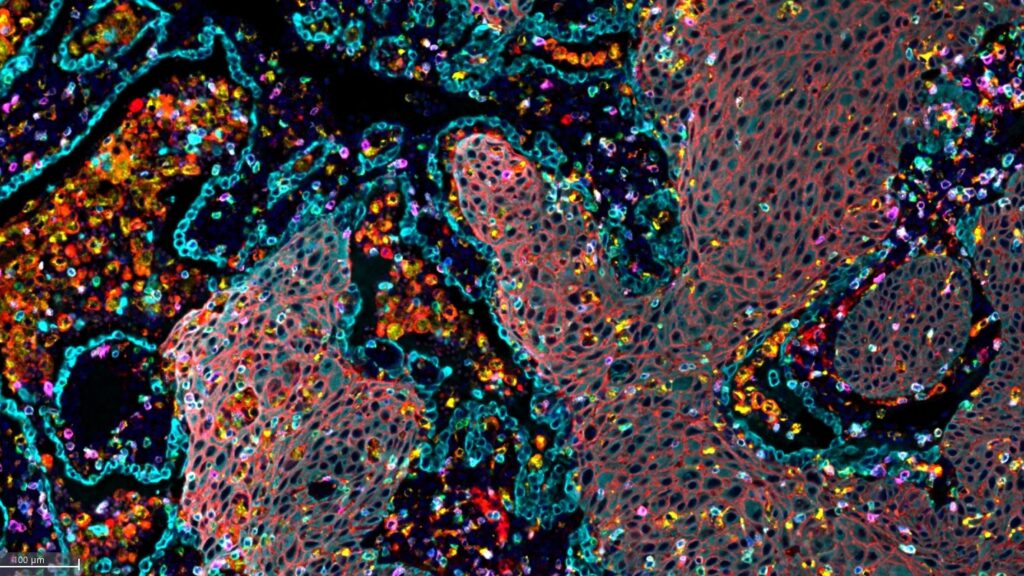
Pancreatic ductal adenocarcinoma kills roughly 55,000 Americans annually. Median survival following a metastatic diagnosis sits below 12 months. Those figures haven’t shifted in any meaningful way across the past several decades, and that stasis forms the essential backdrop for evaluating what Revolution Medicines disclosed in April 2026.
The company released Phase 2 data on daraxonrasib, its RAS(ON) multi-selective inhibitor, in patients carrying KRAS-mutant pancreatic cancer. STAT News covered the release extensively. The data generated attention not because a single compound cured a notoriously lethal malignancy, but because KRAS itself has resisted serious pharmaceutical targeting for more than four decades. That resistance isn’t a story about inadequate effort. It’s a story about protein architecture.
KRAS is small. Its surface carries few binding pockets deep enough or stable enough to accommodate a small molecule with reliable affinity. Early direct-targeting attempts failed across the board, and the field shifted toward downstream effectors, with results that were mixed at best and broadly disappointing over time. It wasn’t until Amgen’s sotorasib received FDA approval in 2021 for KRAS G12C-mutant non-small cell lung cancer that oncologists got their first hard evidence that direct KRAS inhibition was pharmacologically achievable at all. That approval, 13 years after the National Cancer Institute’s RAS Initiative was formalized in 2013 to coordinate exactly this kind of target-directed research, represented something the field had been working toward for a generation.
G12C, though, is only one substitution. KRAS acquires mutations at several codons, and different tumor types distribute those mutations differently. Pancreatic cancer, in particular, carries KRAS mutations in approximately 90% of ductal adenocarcinomas. G12C accounts for a small fraction of those cases. G12D and G12V predominate. A drug that works only against G12C doesn’t reach most pancreatic patients.
Daraxonrasib, according to Revolution Medicines’ April 20, 2026 data release, targets multiple KRAS mutation subtypes. That breadth is what separates the compound methodologically from its predecessors. Whether the Phase 2 response rates translate into overall survival improvements will require larger, randomized data. That’s a standard limitation of single-arm Phase 2 studies, and it’s worth stating plainly: response rate is a surrogate, not a survival endpoint. But in a disease where response rates to standard cytotoxic regimens are historically poor, a clinically meaningful response signal in a KRAS-mutant population merits serious attention.
“We’re finally seeing what cracking this target can look like in a tumor type where patients have had almost nothing,” one oncologist told STAT News.
That assessment reflects where the field is. It doesn’t settle the question of how daraxonrasib will perform in Phase 3, or whether toxicity profiles will hold at broader scale, or how the compound behaves alongside standard backbone regimens. Those questions don’t diminish the Phase 2 result. They define what comes next.
The broader RAS-directed drug development landscape has grown considerably since 2021. Several programs are now tracking multiple mutation subtypes simultaneously, and the Breakthrough Prize Foundation has recognized foundational RAS biology work that helped make current inhibitor design possible. Revolution Medicines’ data arrives into a field that’s already moving, which makes the competitive and clinical context relevant for any interpreting clinician.
Concurrently with the daraxonrasib release, two other programs produced notable data.
Novo Nordisk reported positive Phase 3 findings for etavopivat, an experimental oral agent targeting sickle cell disease. The Phase 3 designation carries methodological weight that Phase 2 doesn’t; randomized controlled trial design at that stage substantially strengthens causal inference. Sickle cell disease affects a population that has lacked oral disease-modifying options for much of the modern treatment era, and etavopivat’s Phase 3 data will draw regulatory scrutiny accordingly. The Wall Street Journal covered Novo Nordisk’s announcement as part of a broader week of biotech disclosures.
Each of these three programs, daraxonrasib, etavopivat, and the Kelonia deal, occupies a distinct disease space. What they share is a methodological moment.
Eli Lilly moved toward an acquisition of Kelonia Therapeutics for more than $2 billion, according to reporting. Kelonia is a privately held developer of in-vivo chimeric antigen receptor T-cell therapies. In-vivo CAR-T approaches attempt to reprogram a patient’s own T-cells without the ex-vivo manufacturing step that makes conventional CAR-T therapies logistically complicated and expensive. That’s not a small distinction. The ex-vivo manufacturing bottleneck has been one of the central barriers to broad CAR-T access since the first approved products reached the market. If in-vivo delivery can achieve comparable efficacy with lower manufacturing burden, the access implications for patients outside major academic centers are substantial.
Lilly’s reported willingness to pay over $2 billion for a private-stage cell therapy developer reflects a valuation logic that isn’t purely based on existing clinical data. It’s a bet on platform. Whether the platform justifies that price depends on data that’s still being generated, which is a limitation worth noting for anyone evaluating the deal’s scientific rationale alongside its financial terms.
The week’s activity doesn’t constitute a unified trend in any rigorous epidemiological sense. It’s a coincidence of timing across three programs in three disease areas. What it does illustrate is the degree to which oncology, hematology, and cell therapy are each cycling through inflection points simultaneously. KRAS inhibition has been coming for years; it’s here now in a more complete form. Sickle cell disease is getting serious oral-agent attention after decades in which hydroxyurea remained the primary pharmacological option. And CAR-T, which was a research-stage concept in 2013, is now generating acquisition targets worth ten figures.
It’s worth returning to the 55,000 figure. That’s roughly how many Americans die from pancreatic cancer each year, against a backdrop of approximately 100,000 new diagnoses annually when adjacent pancreatic malignancies are included in broader estimates. Median survival below 12 months in the metastatic setting has been documented consistently across the past 20 years of treatment data. Daraxonrasib hasn’t changed that median yet. What the Phase 2 data suggests is that it might, in a subpopulation that has historically had almost no targeted options.
That’s a carefully circumscribed claim, and it’s the right one to make at this evidence stage. Phase 2 data in oncology has a complicated track record. Drugs that look compelling in single-arm studies don’t always replicate in randomized Phase 3 trials, and pancreatic cancer has disappointed the oncology community before with agents that produced early signals. The field’s prior experience with targeted therapy in this disease warrants methodological humility.
None of that changes what the data shows. Revolution Medicines’ April 2026 release is among the more carefully watched Phase 2 readouts in oncology this year, not because it’s definitive, but because the target has resisted drugmakers since before most current oncology fellows were born.
Separately, news emerged that Kelonia’s Chief Executive had departed “at the request of the board of directors,” a disclosure that typically signals governance-level tension at a company in the middle of a major transaction. That detail doesn’t alter the scientific rationale for an in-vivo CAR-T platform, but it’s the kind of institutional signal that merits attention when a $2 billion acquisition is reportedly in progress.
Get Hawaii Medical Journal Weekly
Top stories from Hawaii Medical Journal in your inbox. Free.